 Complete E-2 Process Support
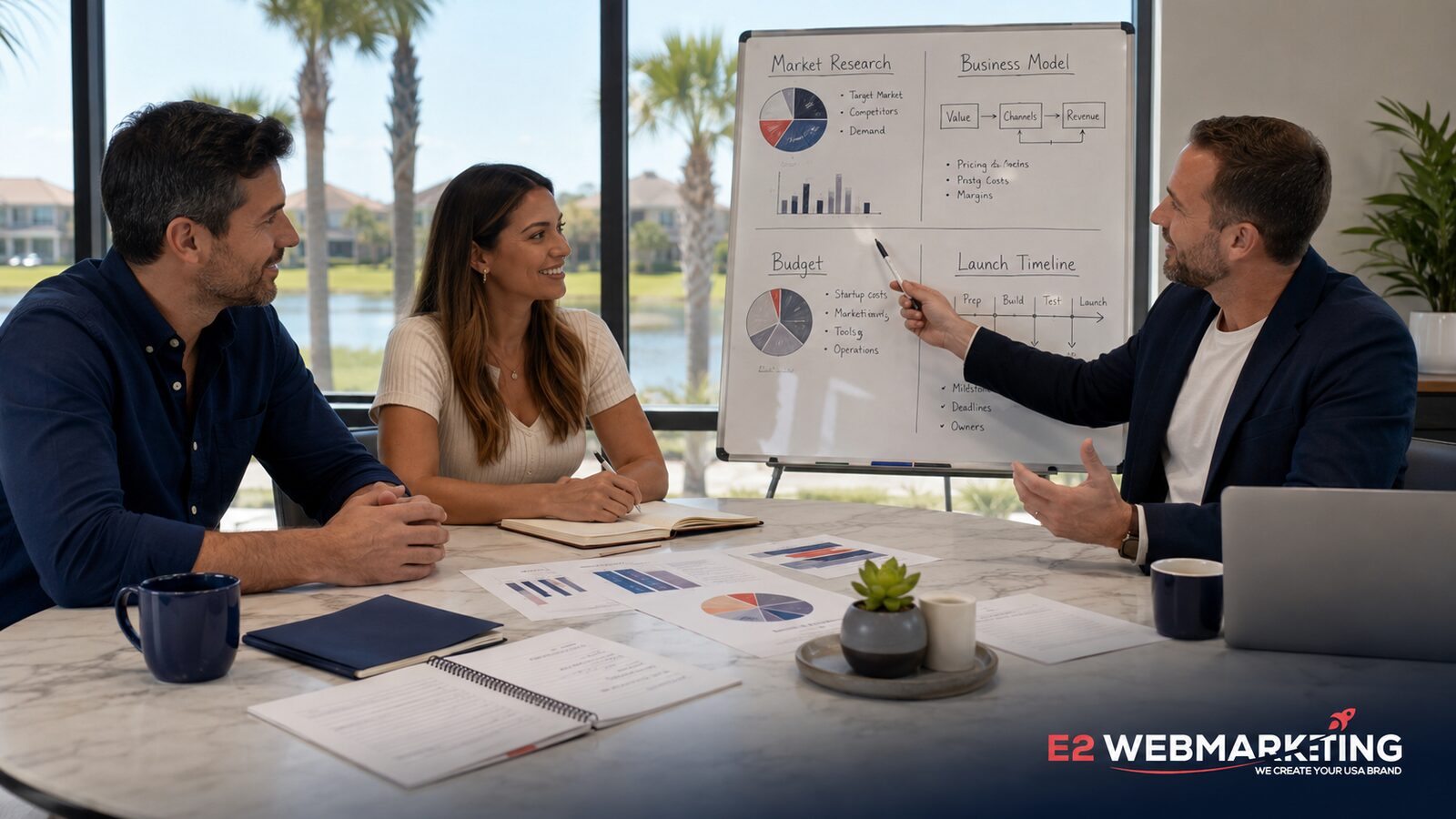
Define the business scope clearly
A useful engagement begins with the offer, customer, location, budget, timeline, and operating responsibilities. Those facts shape market research, financial assumptions, and the work needed before launch.
Business consultants should also be explicit about their limits. Legal, visa, immigration, and tax questions require appropriately licensed professionals.
Turn research into operating decisions
Competitor lists and demographic reports are not enough. Research should influence pricing, service area, staffing, suppliers, sales channels, and the expected pace of customer acquisition.
Assumptions should be labeled and tested. That creates a plan the founder can manage instead of a document built to sit on a shelf.
Coordinate the launch
Brand, website, sales materials, vendor setup, and lead generation need to fit the same model and timeline. When these projects run separately, inconsistencies create expensive rework.
A shared roadmap gives the founder and professional advisors a common view of decisions, dependencies, and evidence.
What business-planning support should deliver
Useful support starts with commercial questions: who the business serves, what it sells, how it reaches customers, what it costs to operate, and who is responsible for execution. The output should be more than a polished document. It should help the owner make decisions about market focus, pricing, capacity, hiring, and the sequence of the launch.
Market research should move beyond broad industry numbers. A local competitor review, customer conversations, pricing checks, search behavior, and operating conditions provide more actionable evidence. The goal is not to collect impressive statistics. It is to identify assumptions that could materially change revenue, cost, or timing—and test the most important ones first.
Financial planning needs a visible connection to operations. Revenue assumptions should reflect price, sales volume, seasonality, and conversion. Expenses should include the less exciting items that often get missed: insurance, software, professional services, payment fees, travel, marketing, maintenance, and working capital. The model should be easy to update when reality provides better information.
How to choose and work with a partner
Ask how the provider learns about the business and validates assumptions. A credible process includes questions, source notes, revisions, and clear boundaries. Be cautious when a service promises a guaranteed outcome or treats every company with the same template. Business support can improve preparation and execution, but it cannot replace licensed legal or immigration advice.
Agree on responsibilities before work begins. Decide who supplies records, confirms facts, approves projections, and coordinates with attorneys or accountants where necessary. Set milestones for research, draft review, financial checks, and final delivery. A shared timeline prevents the business document, website, and operational work from drifting in different directions.
The most valuable outcome is a plan the owner continues to use. After launch, compare actual leads, sales, costs, and capacity with the assumptions. Update the model and priorities rather than treating the plan as finished. A living business plan becomes a management tool; a document opened once and forgotten provides very little practical value.
A practical next step
- Document the customer, offer, region, budget, and timing.
- Assign legal and tax questions to licensed professionals.
- Connect research and numbers to the operating roadmap.
E2 Webmarketing provides business, market-entry, and marketing support. We do not provide legal, visa, or immigration information or advice.